Apartments
English Quarter
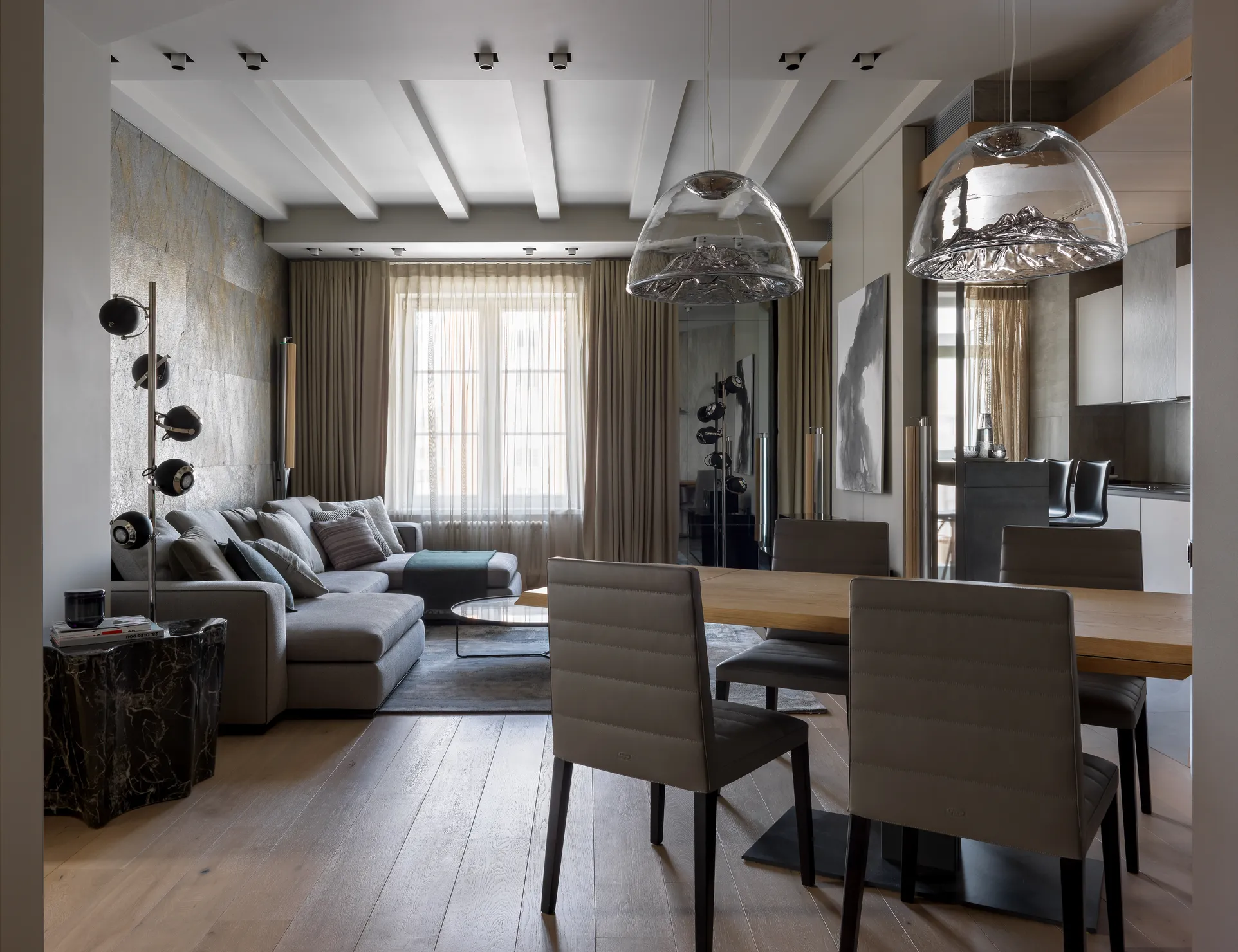
This residential project explores a language of quiet monumentality and restrained luxury. Rather than relying on visual effects, the space is structured through proportion, natural light, material depth, and carefully balanced volumes.
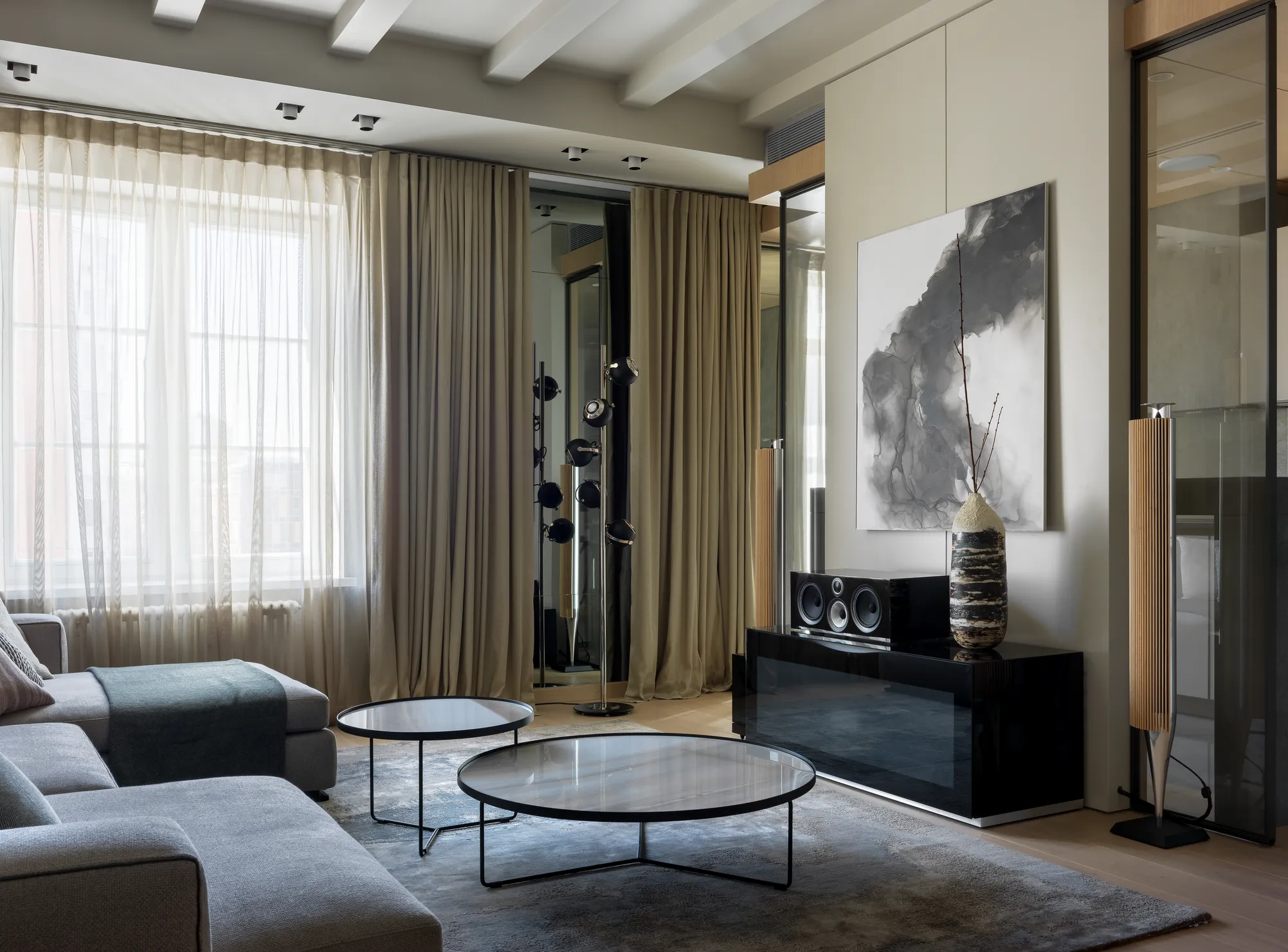
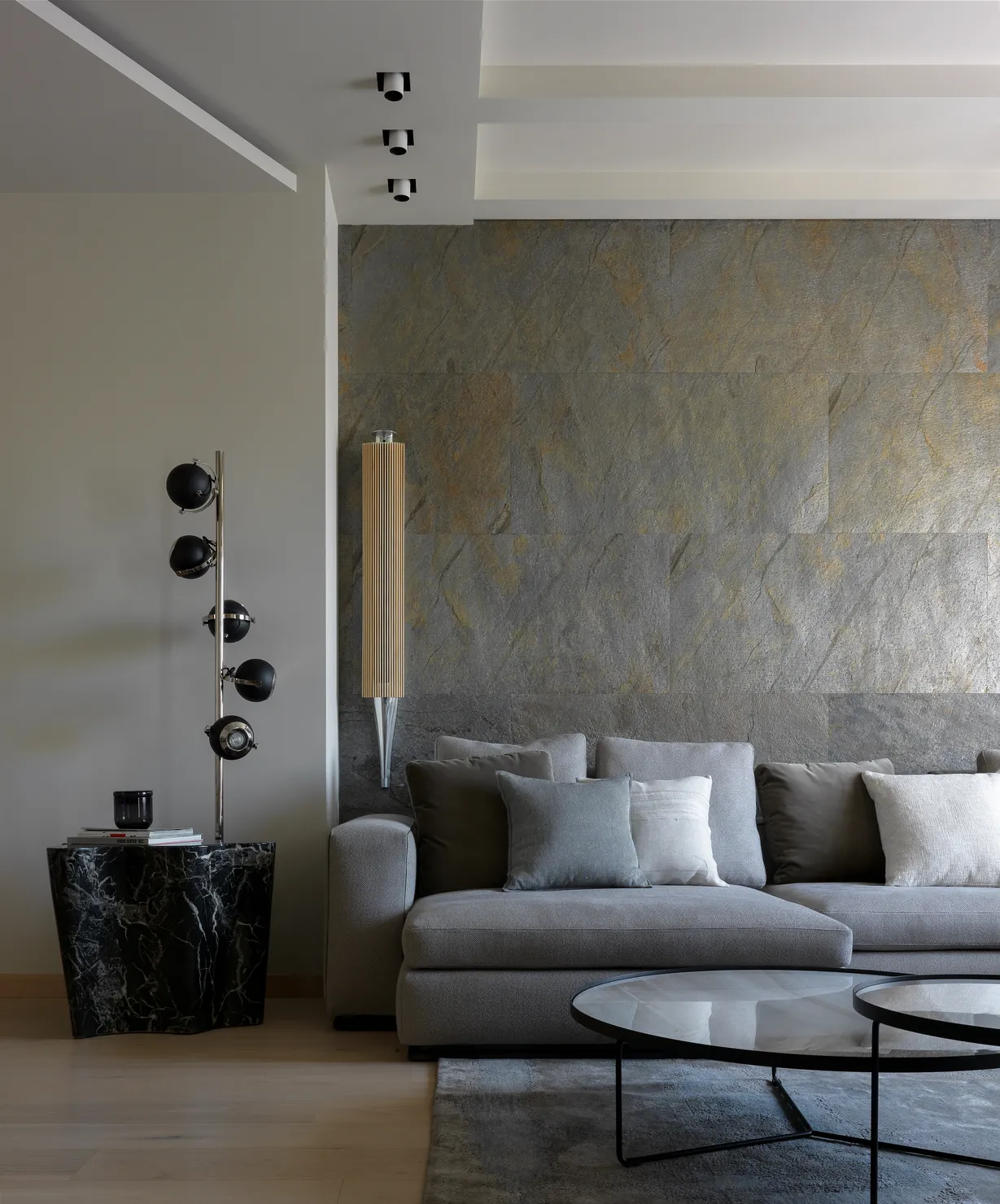
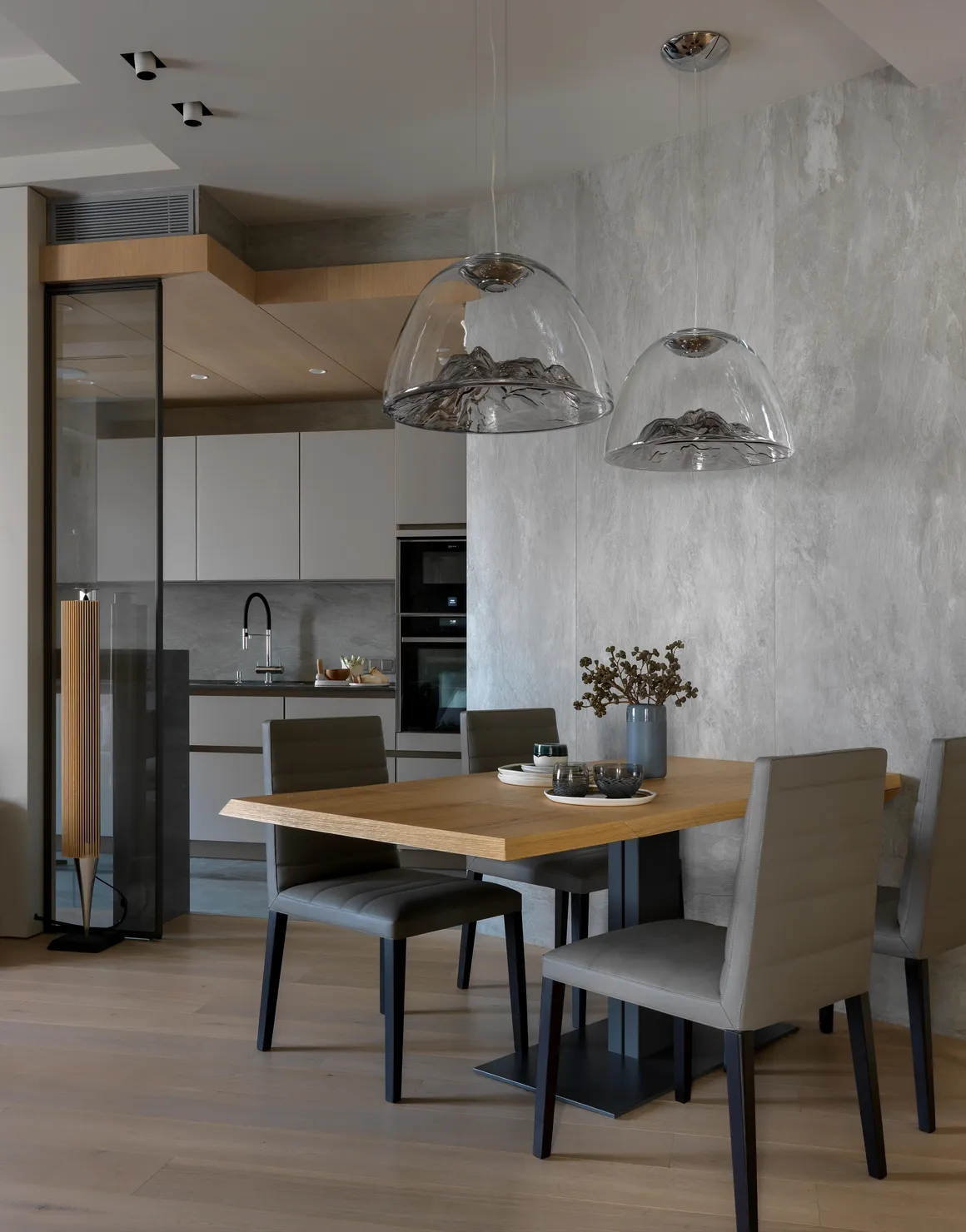
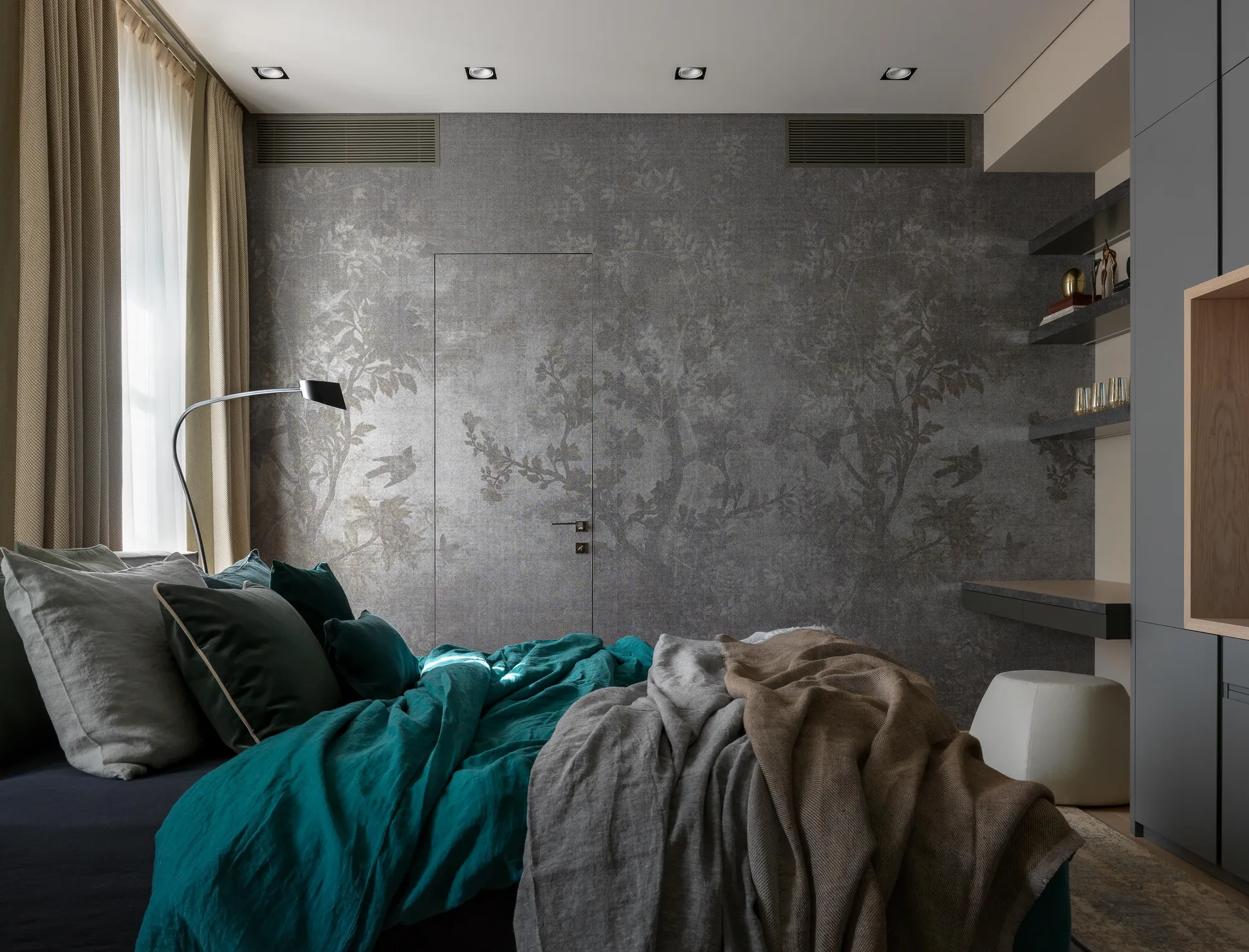
Designed for a family apartment, the interior is organized around an open living and dining space that creates visual continuity between rooms. Architectural elements — ceiling beams, stone surfaces, and custom cabinetry — establish a calm spatial framework, allowing furniture, art, and natural materials to coexist without visual noise.
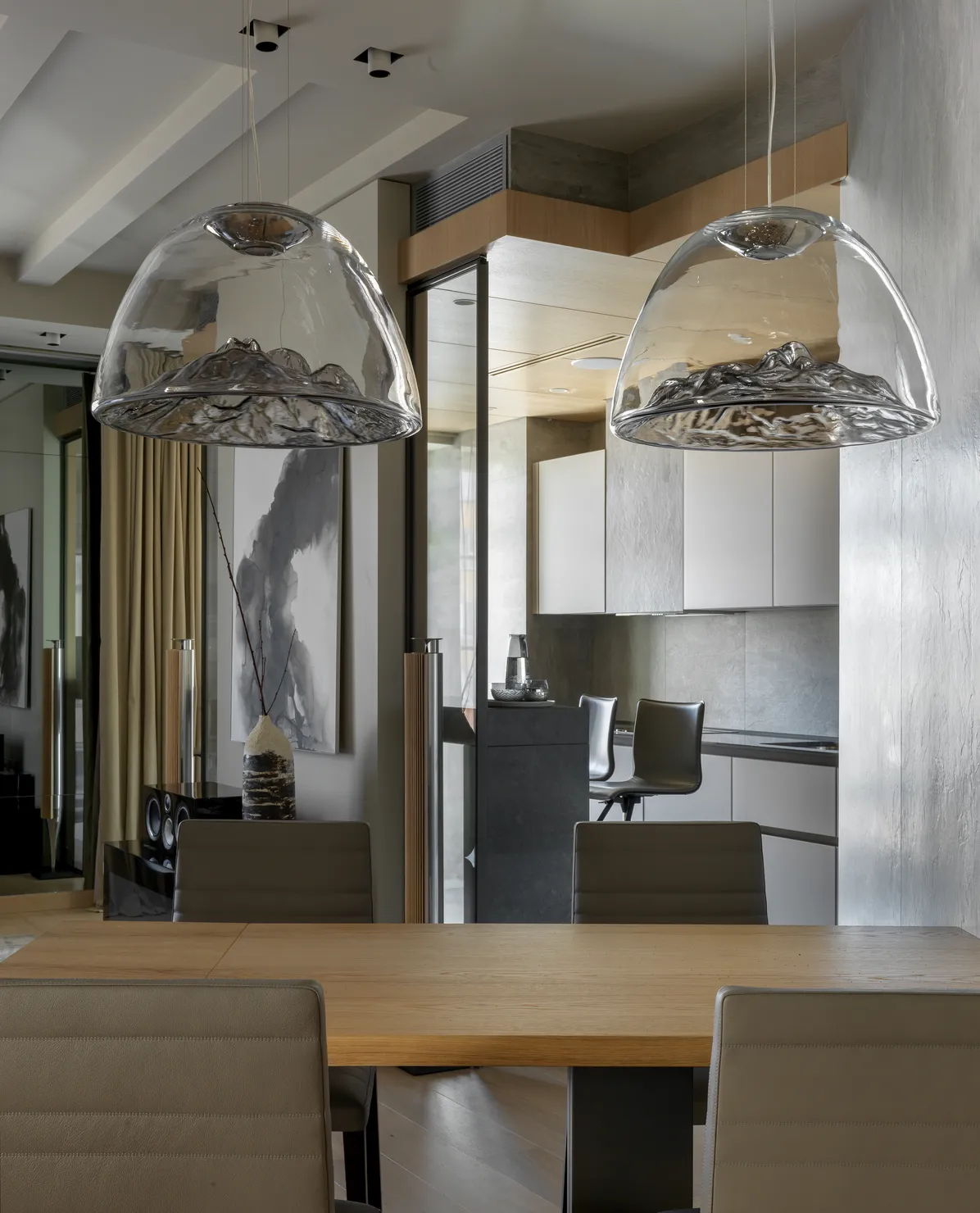
The project reflects a European approach to residential interiors, where comfort and longevity take priority over trends. Furniture and lighting were selected from established Italian and German manufacturers known for precision and material quality. Key pieces include Minotti, Poltrona Frau, Cattelan Italia, B&B Italia, San Giacomo, Bonaldo, Pianca, Vitra, Artemide, AXO Light, and Contardi.
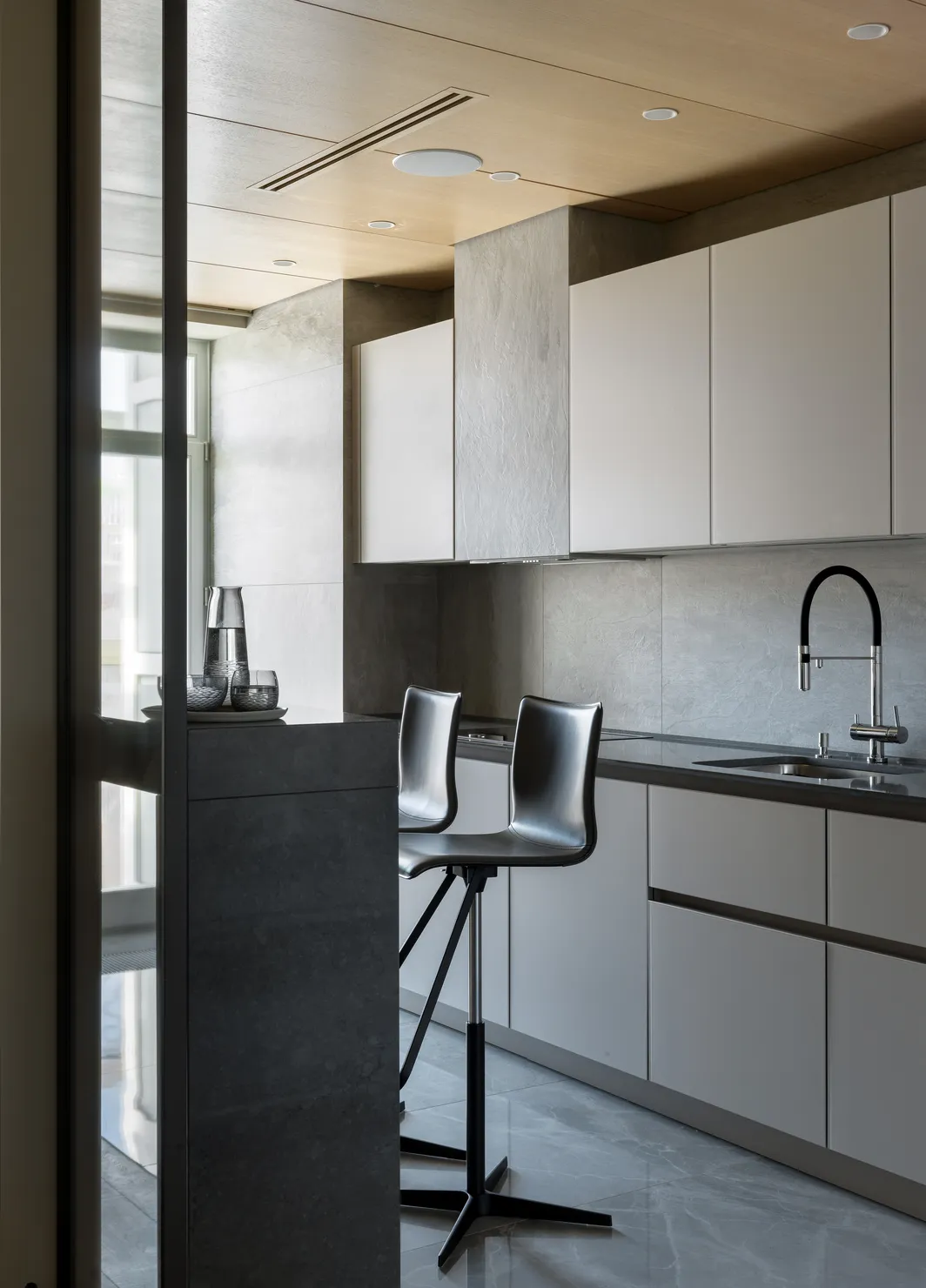
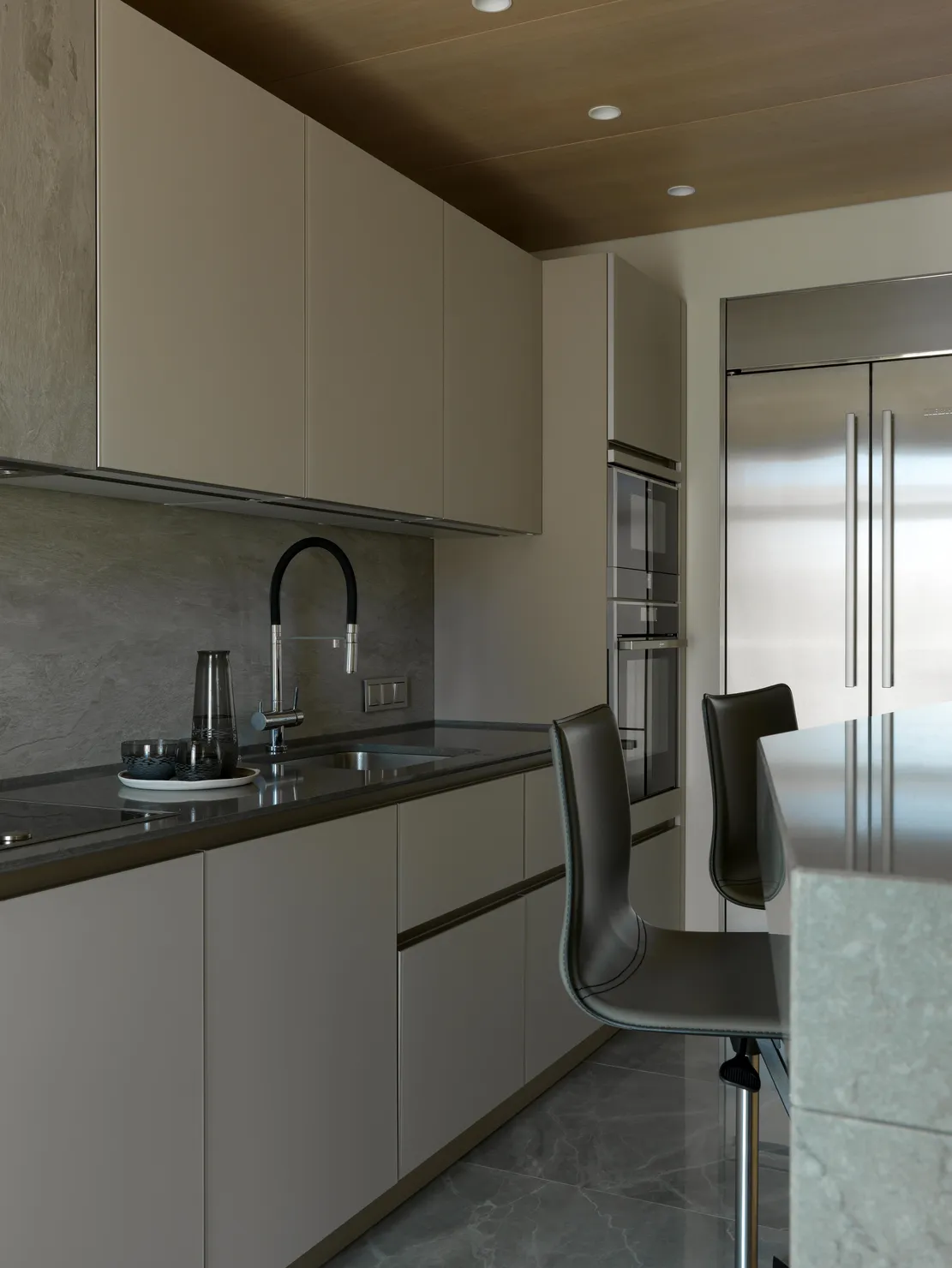
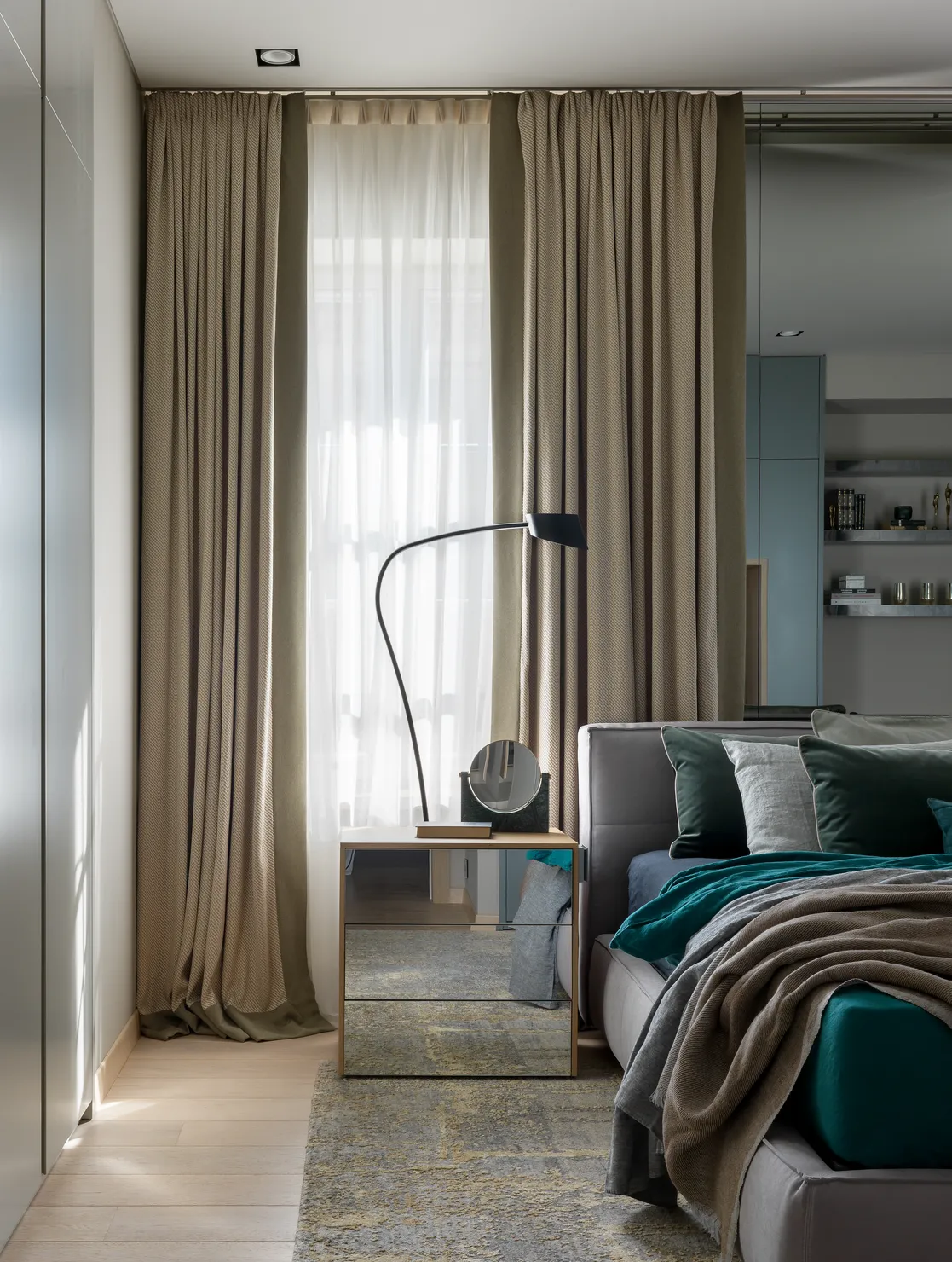
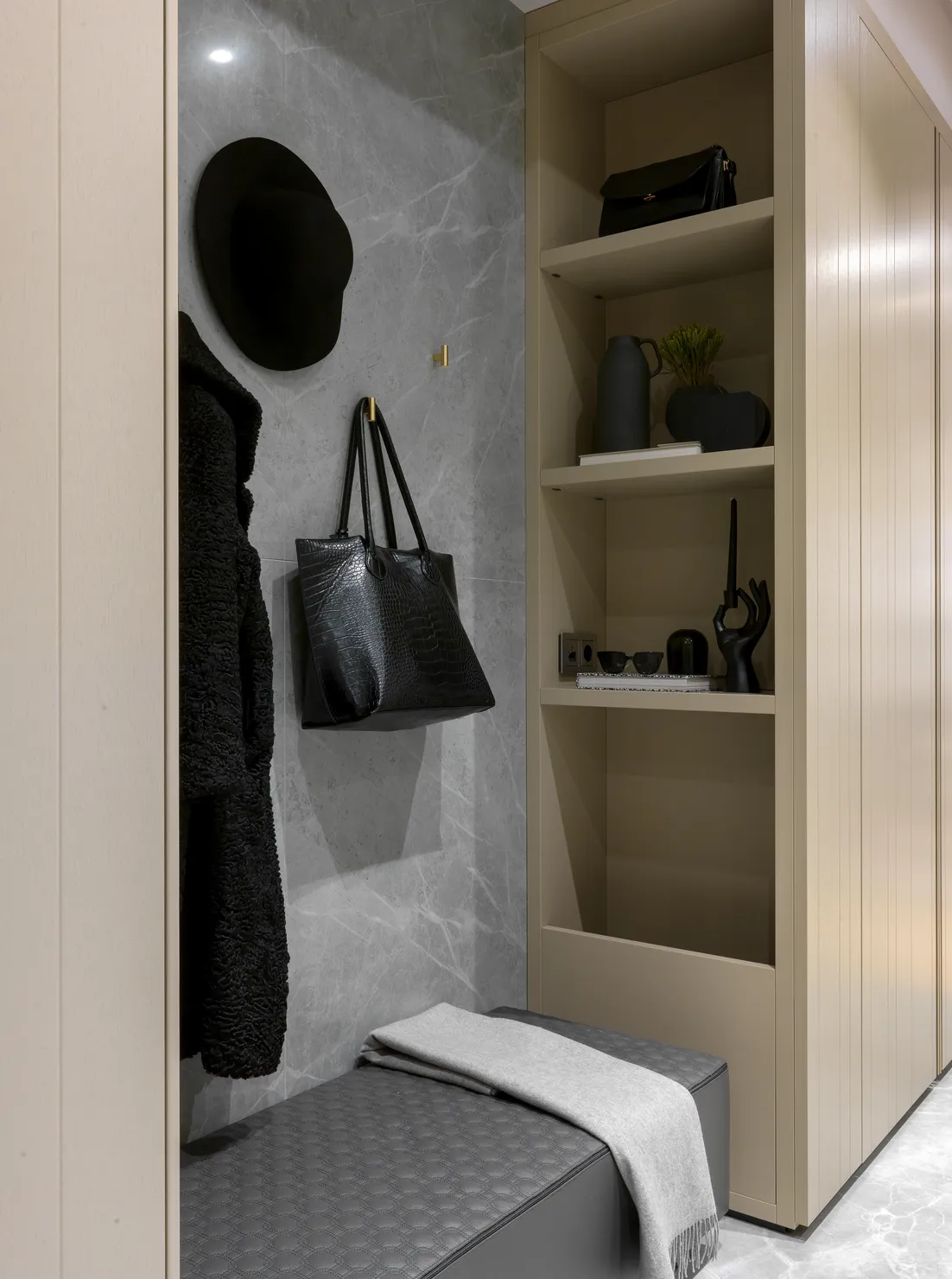
Several architectural elements were designed specifically for the project and fabricated in custom workshops, including built-in shelving, wardrobes, and integrated storage systems. Stone veneer panels, wood surfaces, and matte metal details create subtle contrasts while maintaining a restrained material palette.
The interior also incorporates contemporary art and objects from international and Moscow galleries, reinforcing the idea that residential space can function as a quiet backdrop for art and daily life.
This project reflects the broader design philosophy of Fruktov Interiors: creating spaces that feel calm, structured, and enduring. Instead of decoration, the focus lies on proportion, spatial rhythm, and tactile materials that age naturally over time.
Based in Southern California, Fruktov Interiors works on high-end residential projects across the United States and internationally, translating European design sensibility into contemporary homes in regions such as San Diego, Los Angeles, and coastal California.
The studio’s work is often described as quiet monumentality in contemporary residential interiors — a balance between architectural clarity, emotional restraint, and everyday comfort.


